The 5th Super Austenitic Stainless Steel & Nickel-Based Alloys Conference Concludes Successfully
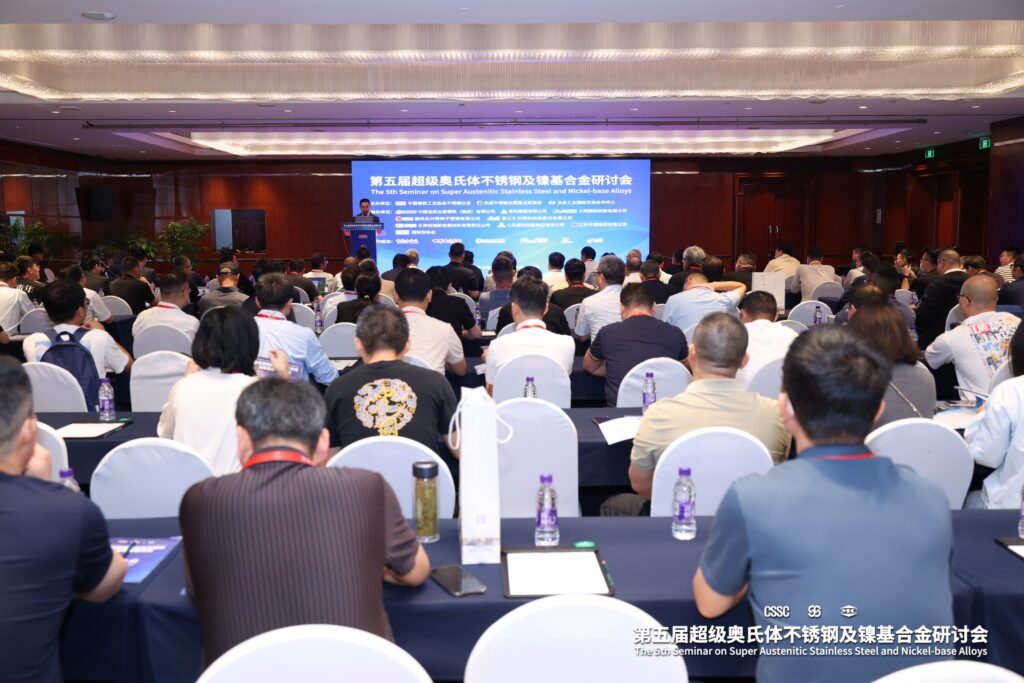
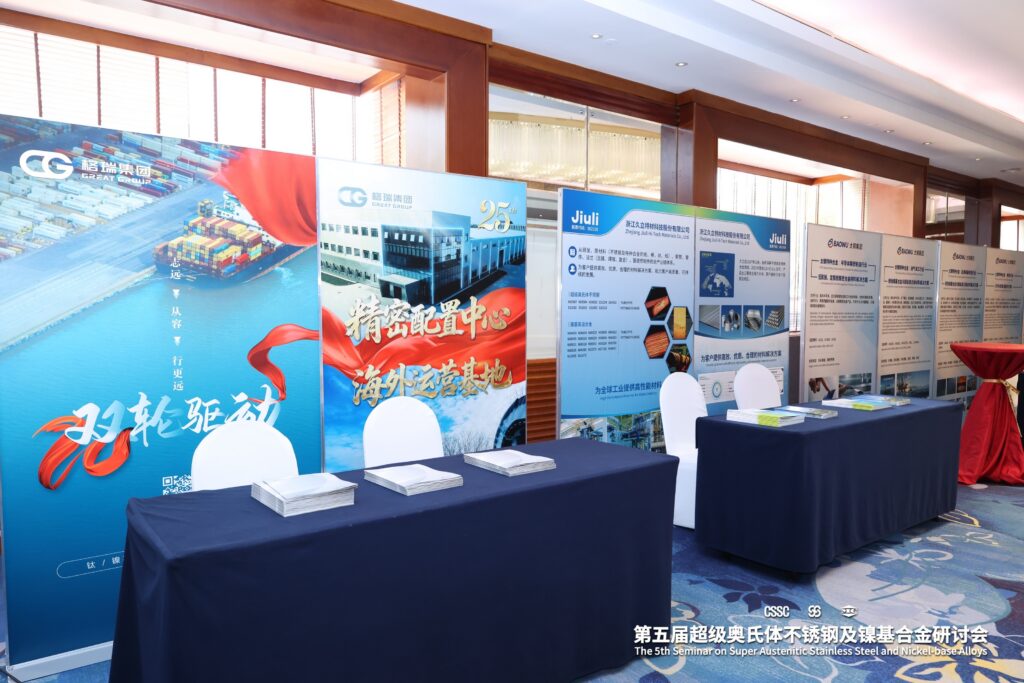
The 5th China Super Austenitic Stainless Steel & Nickel-Based Alloys Conference was recently held successfully, bringing together industry experts, manufacturers, technical professionals, and supply chain partners to exchange insights on the development of advanced materials and specialty alloys.
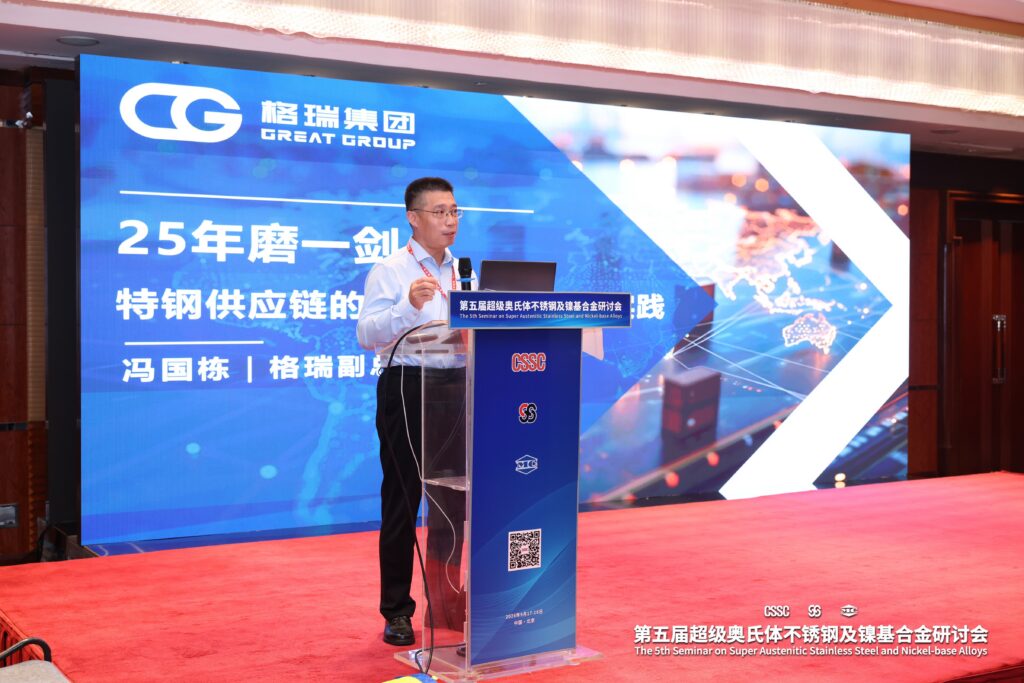
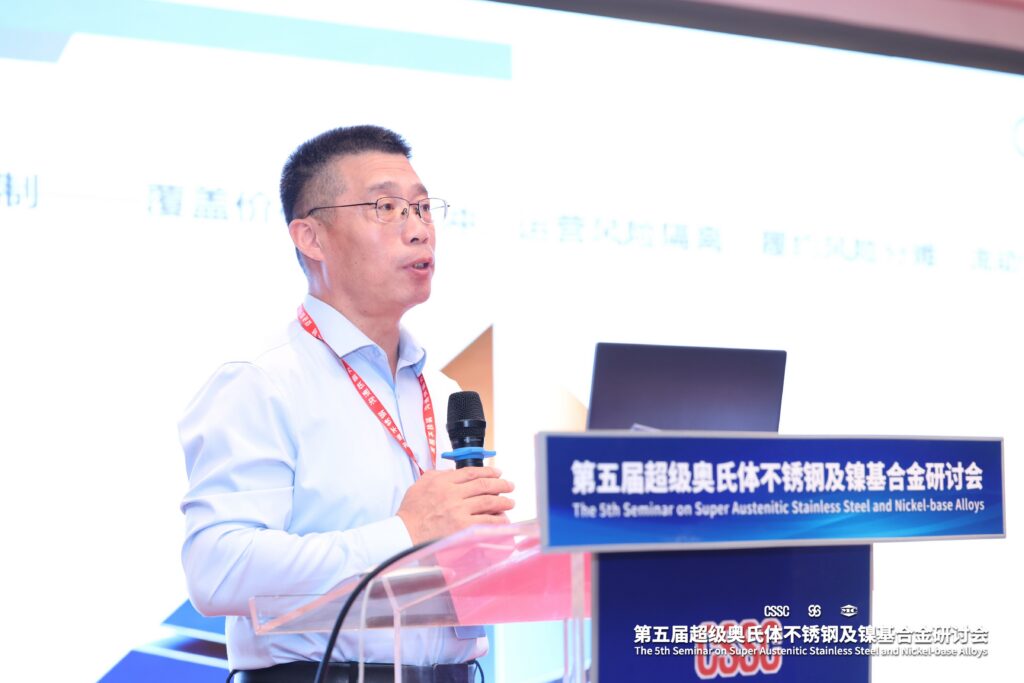
At the conference, Feng Guodong, Deputy General Manager of our company, delivered a keynote presentation titled “25 Years of Experience: Global Trends and China Practices in Specialty Steel Supply Chains.” Drawing on 25 years of industry experience, the presentation examined the evolution of China’s specialty steel industry from the perspective of supply chain development and highlighted the increasingly important role of professional supply chain services.
From Material Innovation to Supply Chain Governance
Over the past decade, China’s specialty steel industry has made significant progress in material development and manufacturing capabilities. From the independent production of 254SMO to wide-width cold-rolled materials serving global nuclear applications, and internationally certified titanium products supporting the aerospace industry, Chinese manufacturers have continued to strengthen their position in high-end materials.
However, material innovation is only one part of the equation.
An equally important question is: How can advanced materials move from mills to end users efficiently, reliably, and economically?
This goes beyond logistics. It involves supply chain governance—including resource coordination, inventory planning, technical communication, quality management, and the ability to respond flexibly to changing customer requirements.
Four Key Roles in the Specialty Materials Supply Chain
Over the course of its development, our team has built capabilities across several key areas of the specialty materials supply chain.
1. Risk Buffer
Specialty materials often involve long production cycles, limited qualified sources, and highly specific technical requirements. Strategic inventory and diversified sourcing can therefore play an important role in supply security.
By maintaining inventories of materials such as C-276, Alloy 625, and 254SMO, establishing technical agreements with global mills, and supporting flexible delivery across multiple grades and specifications, we work to create multiple layers of supply-chain resilience.
2. Resource Connector
The specialty materials market is increasingly global. High-end materials may need to be sourced internationally, while qualified production capacity in China can also serve customers in global markets.
The company operates as a connection point between these resources and markets—supporting the introduction of specialized materials, the export of qualified Chinese materials, and the coordination of technical and quality requirements throughout the process.
From precision foil materials to 254SMO and titanium products, the objective is not simply to move materials from one location to another, but to build reliable connections between global resources and customer requirements.
3. Technical Enabler
As applications become more demanding, material selection increasingly depends on actual operating conditions rather than material specifications alone.
In fields such as rupture discs, canned motor pumps, and controlled nuclear fusion, factors including temperature, pressure, corrosion environment, service life, and processing requirements can all influence material selection.
This creates an opportunity to move beyond an order-based supply model toward application-oriented material matching, bringing technical support further upstream into the customer’s development and engineering process.
4. Ecosystem Builder
The specialty materials supply chain involves far more than manufacturers and end users.
It connects global resources with local manufacturing, material innovation with demanding applications, technical standards with engineering practice, and suppliers with increasingly specialized customer requirements.
Through these connections, we aim to contribute to a broader specialty materials ecosystem that supports both the development of advanced materials and their practical application in demanding industries.
Specialty Materials Distribution as Industrial Infrastructure
The role of the specialty materials supply chain can be viewed through three fundamental questions:
Manufacturers answer: “Can we make it?”
End users answer: “How can we use it effectively?”
The supply chain answers: “Can the right material be obtained consistently, reliably, and predictably?”
For high-performance materials, this final question is increasingly important.
After 25 years of experience, our team continues to develop its role as a supply chain partner connecting materials, technology, resources, and applications.
With a global perspective, technical capabilities, and systematic supply chain services, the company is working to create more reliable connections between advanced materials and the demanding applications they serve.